If you live in Michigan, your deck has survived snow loads, ice dams, freezing rain, spring thaw, humidity, and blazing summer sun. That’s a lot.
And while your deck might look fine from the surface, hidden structural issues can turn into serious safety risks—especially before graduation parties, BBQ season, and football Saturdays.
As a Michigan homeowner, here’s your safety-first deck checklist to help you determine if your deck is safe—or if it’s time for a professional inspection.
Why Deck Safety Matters in Michigan
Michigan weather is tough on exterior structures. Freeze-thaw cycles expand and contract wood. Snow adds weight stress. Moisture creates rot. Humidity accelerates corrosion on fasteners.
According to the North American Deck and Railing Association (NADRA), millions of decks in the U.S. are past their useful life.
If your deck is:
10+ years old
Built before modern code updates
Showing visible wear
Attached to your home
It deserves a safety review.
Michigan Deck Safety Checklist
Walk through this list carefully. If you answer “yes” to any of these, it may be time for a professional inspection.
1. Is There Movement or Wobbling?
Does your deck shake when multiple people walk on it?
Do railings move when pushed?
Do stairs feel unstable?
Red Flag: Any noticeable movement can indicate loose connections, failing footings, or structural compromise.
2. Check the Ledger Board (The Most Critical Area)
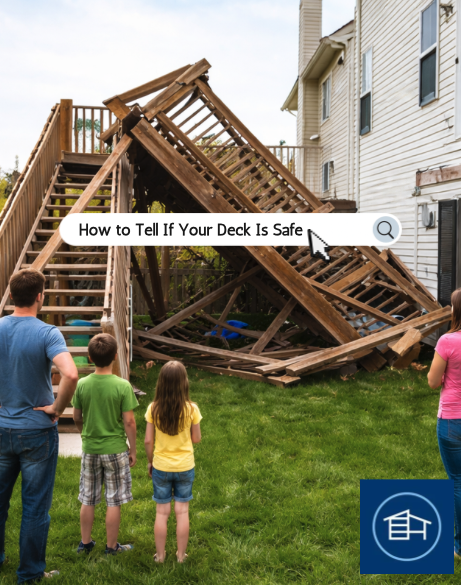
The ledger board connects your deck to your house. If this connection fails, the entire deck can collapse.
Look for:
Gaps between deck and home
Rusted bolts or lag screws
Missing flashing
Soft or rotting wood near attachment point
Michigan Tip: Freeze-thaw cycles can worsen water intrusion behind the ledger board.
If you’re unsure, this is one area you should never ignore.
3. Look Underneath the Deck
Most homeowners never check underneath.
Inspect for:
Rotting joists
Cracked beams
Sagging supports
Mold or excessive moisture
Shifting concrete footings
Use a screwdriver to gently press into suspicious wood. If it sinks easily, rot may be present.
4. Examine Fasteners & Hardware
Michigan’s moisture and winter salt exposure can corrode hardware.
Watch for:
Rusted screws or nails
Corroded joist hangers
Missing bolts
Nails backing out of boards
Modern decks use structural connectors designed to handle heavy loads. Older decks often do not.
5. Inspect Deck Boards
Surface issues may signal deeper problems.
Look for:
Soft spots
Cracks splitting along grain
Warped or cupping boards
Loose boards
Protruding screws
If boards feel spongy underfoot, that’s a safety issue.
6. Railings & Stairs
Railings should:
Not move when pushed firmly
Be properly anchored
Meet current height requirements
Stairs should:
Have consistent rise and run
Not flex when stepped on
Have secure handrails
Loose railings are one of the most common deck safety issues.
7. Age of the Deck
If your deck is:
15–20+ years old
Built with pressure-treated lumber from early generations
Never professionally inspected
It may be nearing the end of its structural lifespan.
Signs It’s Time for a Professional Deck Inspection
Call for an inspection if you notice:
Structural movement
Ledger board concerns
Visible rot
Major hardware corrosion
Posts pulling away from footings
You’re preparing to host a large gathering
You’re buying or selling your home
A deck collapse is preventable—but only if issues are caught early.
Why Michigan Homeowners Should Schedule an Inspection Before Spring
Spring in Michigan means:
Graduation parties
Memorial Day cookouts
Summer entertaining
Heavy foot traffic
Before you invite 25+ people onto your deck, make sure it’s structurally sound.
An inspection can:
Identify safety hazards
Catch issues before they become costly
Provide peace of mind
Extend the life of your deck
Repair vs. Replace: What’s Next?
Depending on what’s found, you may need:
Minor hardware replacement
Structural reinforcement
Partial rebuild
Full deck replacement
If your deck frame is compromised, replacing surface boards alone is not a safe solution.
Don’t Guess When It Comes to Safety
Your deck isn’t just a structure.
It’s where:
You grill on Friday nights
Your kids run barefoot in summer
You sip coffee on cool Michigan mornings
You host friends during football season
Safety should never be an afterthought.
If you’re unsure about your deck’s condition, schedule a professional inspection before the season begins.
Need a Deck Inspection in West Michigan?
If you’re in Grand Rapids, Kalamazoo, Plainwell, or surrounding areas, our team specializes in safety-first deck inspections, structural repairs, and composite deck replacements built for Michigan weather.
Contact us today to schedule your inspection and ensure your deck is safe for the season.
Because your home—and your family—deserve it.
Tags
Subscribe to Hutcherson Construction's Blog



Comments