FROM HUTCHERSON CONSTRUCTION
STEP ONE
Immediately After the Storm
The hours right after a storm can feel chaotic, but a few smart moves early on will save you significant money and headaches during the insurance process.
Prioritize Safety First
Before stepping outside or entering any area of your home that was damaged, make sure the structure is safe. Watch for downed power lines, unstable trees leaning against the house, standing water near electrical panels, or visible structural compromise. When in doubt, call your local utility company and keep everyone out until it's cleared.
Document Everything — Before You Clean Up
Your photos and videos are evidence. Take extensive documentation of all damage before moving debris, making repairs, or touching anything. Use your phone to capture wide shots showing the full scope of damage, then close-ups of specific problem areas. Don't forget to photograph interior damage as well — water stains, wet insulation, damaged ceilings, and flooring all count.
1. Photograph all exterior damage: Walk the full perimeter. Capture the roof from multiple angles if safe. Document damage to siding, gutters, windows, decking, fences, and outbuildings.
2. Document interior water intrusion: Check attic spaces, ceilings, and any rooms below damaged areas. Water can travel far from the point of entry — check thoroughly.
3. Make temporary protective measures: If you have a tarp or plastic sheeting, cover exposed areas to prevent further water damage. Keep your receipts — these emergency costs are often reimbursable.
4. Contact your insurance company: File your claim as soon as possible. Most insurers want to hear from you within 24–72 hours of a major event. Have your policy number and documentation ready.
PRO TIP FROM HUTCHERSON Save a written log as you document: note the date, time, and a brief description with each photo or video. This timestamp record strengthens your claim and creates a clear paper trail if there are any disputes later. |
STEP TWO
Working With Your Insurance Company
The insurance claim process can feel like a second job — especially when you're already dealing with a damaged home. Understanding how it works will help you advocate for a fair settlement.
Understanding Your Policy Before the Adjuster Arrives
Pull out your homeowner's insurance policy and review your coverage. Key things to look for include your deductible amount, whether you have Actual Cash Value (ACV) or Replacement Cost Value (RCV) coverage, and any specific exclusions. ACV policies factor in depreciation, meaning you may receive less than what a full repair actually costs. RCV policies pay the full cost to repair or replace — a meaningful difference when you're replacing a roof.
The Adjuster Visit
After you file your claim, your insurance company will send an adjuster to assess the damage. This person works for the insurance company — their job is to evaluate the loss, not necessarily to find every damaged item on your property. This is not a criticism of adjusters; it's simply the nature of the role.
Having a knowledgeable contractor present during the adjuster's inspection is one of the most valuable things a homeowner can do. We've helped clients recover thousands of dollars in legitimately missed damage. |
You have every right to have a contractor present during the adjuster's inspection. A qualified contractor who works regularly with insurance claims will know what damage to point out and how to communicate it in terms the adjuster understands. At Hutcherson Construction, we're happy to accompany homeowners during this visit at no charge.
Reviewing the Scope of Loss
After the adjuster's visit, you'll receive a written Scope of Loss — a document outlining what the insurance company agrees to pay for and how much. Read this carefully. Compare it against your contractor's assessment. If items are missing or amounts seem low, you can and should dispute them.
5. Request a supplemental claim if needed: If your contractor identifies damage or line items not included in the original scope, a supplemental claim can be filed. This is common and expected — it's not adversarial.
6. Don't accept the first offer if it's incomplete: You are not obligated to accept the first estimate. If the amount doesn't cover the actual cost of a quality repair using current material prices, push back with documentation.
7. Understand depreciation holdbacks: With RCV policies, you'll typically receive an initial payment minus depreciation. Once repairs are complete, you can request the 'recoverable depreciation' as a second check. Don't forget this step — it can be substantial.
WATCH OUT FOR THIS Be cautious of contractors who offer to waive your deductible or inflate the scope of a claim to cover it. This is insurance fraud — it's illegal, and it puts you at risk, not just the contractor. A reputable contractor will always work within the bounds of a legitimate claim. |
Public Adjusters: When Do They Make Sense?
A public adjuster is an independent professional who represents you — the homeowner — in the claims process, rather than the insurance company. They typically charge a percentage of your claim settlement (often 10–15%). For very large, complex claims involving significant structural damage, a public adjuster can sometimes recover substantially more than the initial offer. For smaller claims, the fee may outweigh the benefit. Ask us — we can give you an honest read on whether it's worth it for your situation.
STEP THREE
What to Look For in a Storm Damage Contractor
After a major storm, contractors appear quickly. Some are experienced professionals doing quality work. Others are what the industry calls "storm chasers" — out-of-area companies that show up after disasters, do fast low-quality work, and disappear before problems surface. Knowing the difference protects both your home and your wallet.
Green Flags: What a Trustworthy Contractor Looks Like
✓ Licensed and insured in Michigan — ask for proof before signing anything
✓ Physical local address and established presence in the community
✓ Verifiable reviews on Google, the BBB, and local community groups
✓ Willing to provide a detailed, itemized written estimate — not a verbal quote
✓ Familiar with the insurance claim process and willing to work directly with your adjuster
✓ Offers a written workmanship warranty in addition to manufacturer material warranties
✓ Doesn't pressure you to sign immediately or offer deals that expire "today only"
✓ Can provide references from recent storm damage jobs in your area
✓ Pulls the necessary permits — required for most storm damage repair work in Michigan
Red Flags: Walk Away From These
✗ Asks you to sign an Assignment of Benefits before the scope of work is defined
✗ Offers to waive your deductible or give you cash back — this is illegal
✗ Can't provide proof of license, insurance, or a local address
✗ Wants full payment upfront before any work begins
✗ Refuses to provide a written contract or itemized estimate
✗ Uses high-pressure tactics or creates artificial urgency
✗ Arrived at your door unsolicited immediately after the storm with no prior relationship in your area
✗ Can't explain what materials they're using or where they source them
OUR RECOMMENDATION Get at least two to three written quotes for any significant repair. Prices should be in a similar range — a quote that's dramatically lower should raise questions, not excitement. Cheap repairs done poorly will cost you far more when they fail. |
BY TRADE
What to Know for Each Type of Repair
Different types of storm damage come with their own considerations. Here's what to keep in mind when getting quotes for the most common repairs.
🏠 Rofing |
Hail and wind damage are the most common roofing claims. Ask about shingle grade (30-year vs. 50-year vs. impact-resistant), whether old shingles will be fully torn off or layered over, underlayment quality, drip edge, and flashing. Get specifics on the manufacturer's warranty — and make sure the contractor is a certified installer to honor it. |
🏗️ Siding |
Wind-driven rain and hail can crack, dent, or displace siding panels. Ask whether matching existing siding is possible or if a full replacement is more cost-effective. Understand the difference between vinyl, fiber cement, and engineered wood options. Moisture barrier installation behind new siding is non-negotiable — don't let a contractor skip it. |
🪵 Decking |
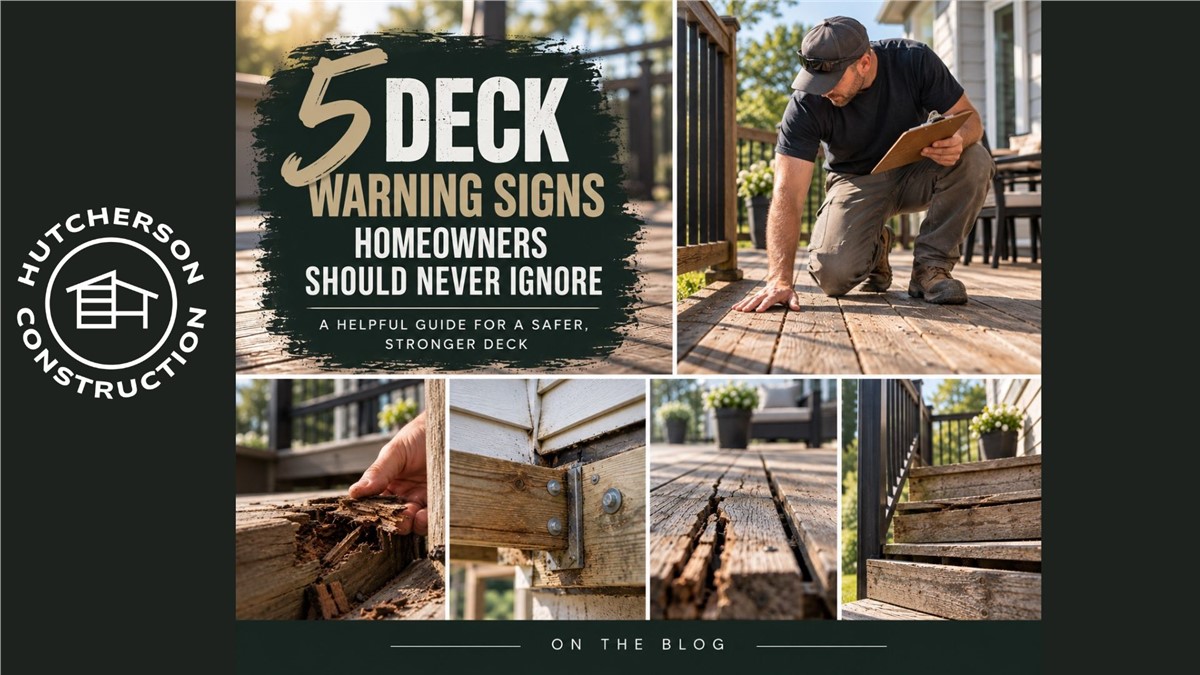
Heavy debris, fallen limbs, or ice damage can compromise deck boards, framing, and structural supports. Don't just replace surface boards if the structure underneath is compromised — a thorough inspection of joists, ledger attachment, posts, and footings is essential. Ask about composite vs. pressure-treated options and how repairs will be secured to code. |
🪟 Gutters & Fascia |
Gutters are often an afterthought but play a critical role in directing water away from your foundation. Hail and heavy debris can dent, separate, or fully detach gutter systems. Ask about seamless vs. sectional gutters, proper pitch and drainage, and whether fascia boards behind the gutters were also damaged. |
🔲 Windows & Doors |
Hail can crack glass, damage seals, and compromise frames. Even if glass is intact, a seal failure from impact damage will cause fogging and energy loss over time. Get a quote that includes inspection of the frame, seal integrity, and proper flashing reinstallation — not just glass replacement. |
🌲 Structural & Tree Damage |
If a tree or large limb impacted your home, the visible damage may be only part of the story. Hidden structural damage to rafters, sheathing, or wall framing is common. Insist on a full structural assessment by an experienced contractor before any cosmetic repairs begin — and confirm your insurer has been notified of the full scope. |
Questions to Ask Every Contractor
✓ What specific materials will you use, and what are their warranty terms?
✓ Are you pulling permits for this work?
✓ Who exactly will be doing the work — your crew or subcontractors?
✓ What does your workmanship warranty cover, and for how long?
✓ How do you handle hidden or additional damage discovered once work begins?
✓ What is your payment schedule — deposits, progress payments, final?
✓ How long do you estimate the project will take from start to completion?
A NOTE FROM US
Why We Do This Work
We started Hutcherson Construction because we believe West Michigan homeowners deserve a contractor they can trust — especially when they're already dealing with the stress of storm damage. We've seen what happens when families rush into a contract with the wrong company, and it's something we've made it our mission to prevent in our community.
Our approach is simple: we give you a thorough, honest assessment, a transparent written estimate, and we back our work with a warranty we're proud to stand behind. We work directly with insurance adjusters, communicate clearly throughout every project, and we're not going anywhere when the job is done.
If your home was recently damaged by a storm, call us for a free inspection and estimate. Even if you're not sure whether the damage is worth claiming, we'll give you our honest read — no pressure, no obligation.
Get Your Free Storm Damage Inspection We'll assess your damage, walk you through your options, and — if needed — help you navigate the insurance process from start to finish. Schedule a Free Estimate Today Licensed & Insured · Serving West Michigan |
Tags
Subscribe to Hutcherson Construction's Blog




Comments