If you're shopping for a new composite deck, you've probably seen terms like "scratch-resistant" and "scratch-proof." While they sound similar, they mean very different things—and understanding the difference can help you make a more informed decision for your outdoor living space.
Let's break it down.
Scratch-Resistant Doesn't Mean Indestructible
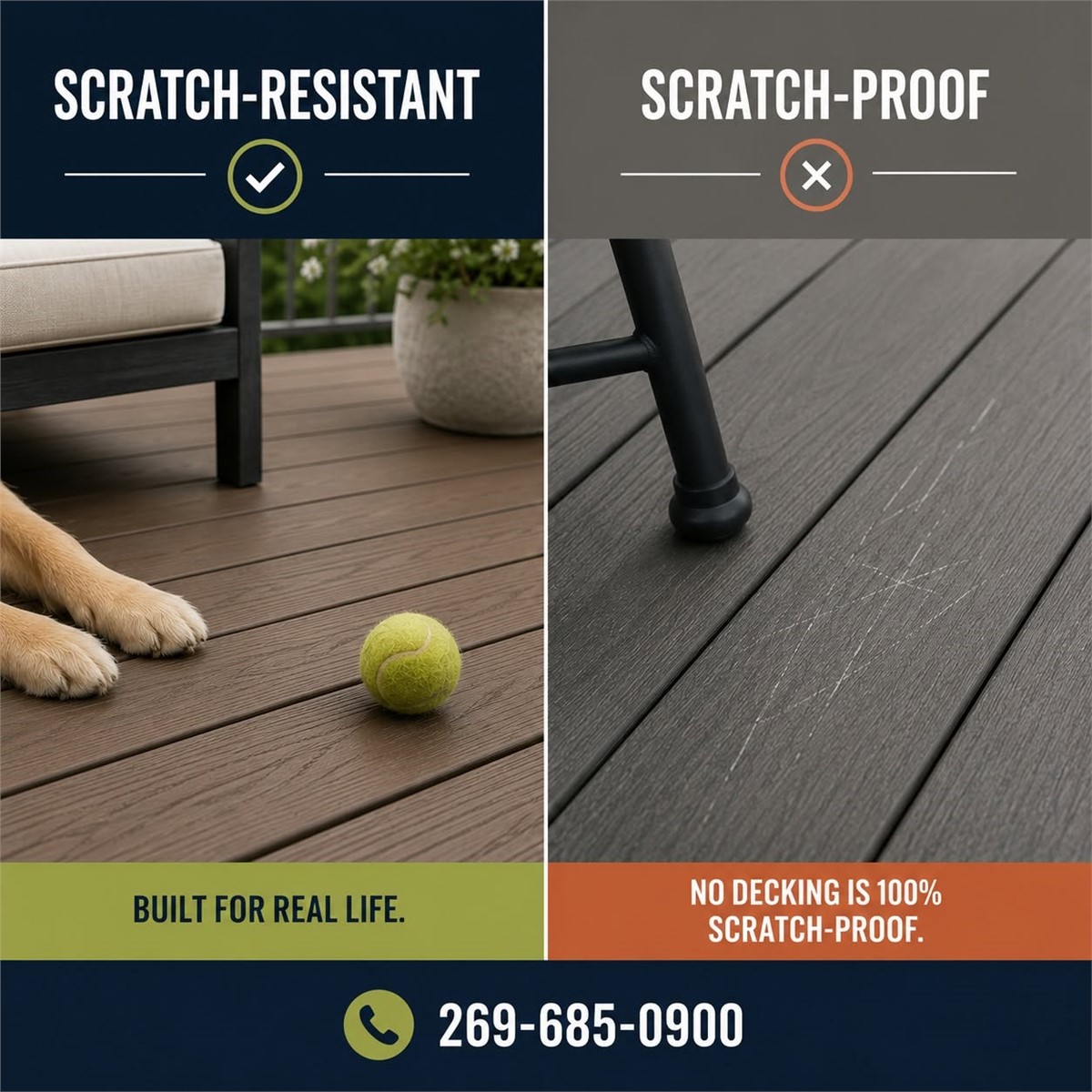
High-quality composite decking is designed to withstand the demands of everyday life. That means it's scratch-resistant, not scratch-proof.
Scratch-resistant decking is engineered to handle common wear and tear, including:
- Patio furniture being moved across the deck
- Kids playing outside
- Pets running and playing
- Regular foot traffic
- Everyday outdoor entertaining
Compared to traditional wood decking, premium composite materials are far more durable and less likely to show minor scuffs or scratches from normal use.
The Truth About "Scratch-Proof"
Here's the reality: No decking material is truly scratch-proof.
If someone tells you their decking can't be scratched, it's worth asking more questions.
Heavy furniture dragged across the surface, sharp metal objects, dropped tools, or other abrasive materials can still leave marks on composite decking. That's true whether it's composite, PVC, hardwood, or pressure-treated lumber.
The goal isn't to create a deck that's impossible to damage—it's to choose one that's built to stand up to real life.
Why Composite Decking Is Still a Smart Investment
One of the biggest reasons homeowners choose premium composite decking is because it requires significantly less maintenance than wood while maintaining its beauty year after year.
Unlike traditional wood decks, composite decking doesn't require:
- Annual staining
- Regular sealing
- Frequent sanding
- Constant repainting
Instead, you'll spend more time enjoying your deck and less time maintaining it.
How to Protect Your Composite Deck
Even though composite decking is highly durable, a few simple habits can help keep it looking its best:
- Lift heavy furniture instead of dragging it whenever possible.
- Use protective pads under furniture legs.
- Clean dirt and debris regularly to prevent unnecessary surface wear.
- Avoid dragging grills, planters, or metal objects across the decking.
- Follow the manufacturer's recommended cleaning guidelines.
These small steps can help preserve your deck's appearance for years to come.
The Bottom Line
When comparing decking materials, don't get caught up in marketing buzzwords.
Scratch-resistant means your deck is built to handle everyday life. Scratch-proof simply doesn't exist.
Premium composite decking offers exceptional durability, low maintenance, and long-lasting beauty, making it an excellent choice for busy families, pet owners, and anyone who wants more time relaxing and less time maintaining their outdoor space.
If you're considering a new deck, our team can help you compare materials, explain the differences between composite products, and design an outdoor space that's built for the way you live.
Ready to build a deck you'll enjoy for years to come? Contact Hutcherson Construction today for a free consultation and let us help you find the perfect composite decking solution for your home.
Subscribe to Hutcherson Construction's Blog





Comments