A new deck. Updated siding. Energy-efficient windows. New exterior doors.
These projects can completely change the look, comfort, and value of your home—but they can also come with a significant price tag.
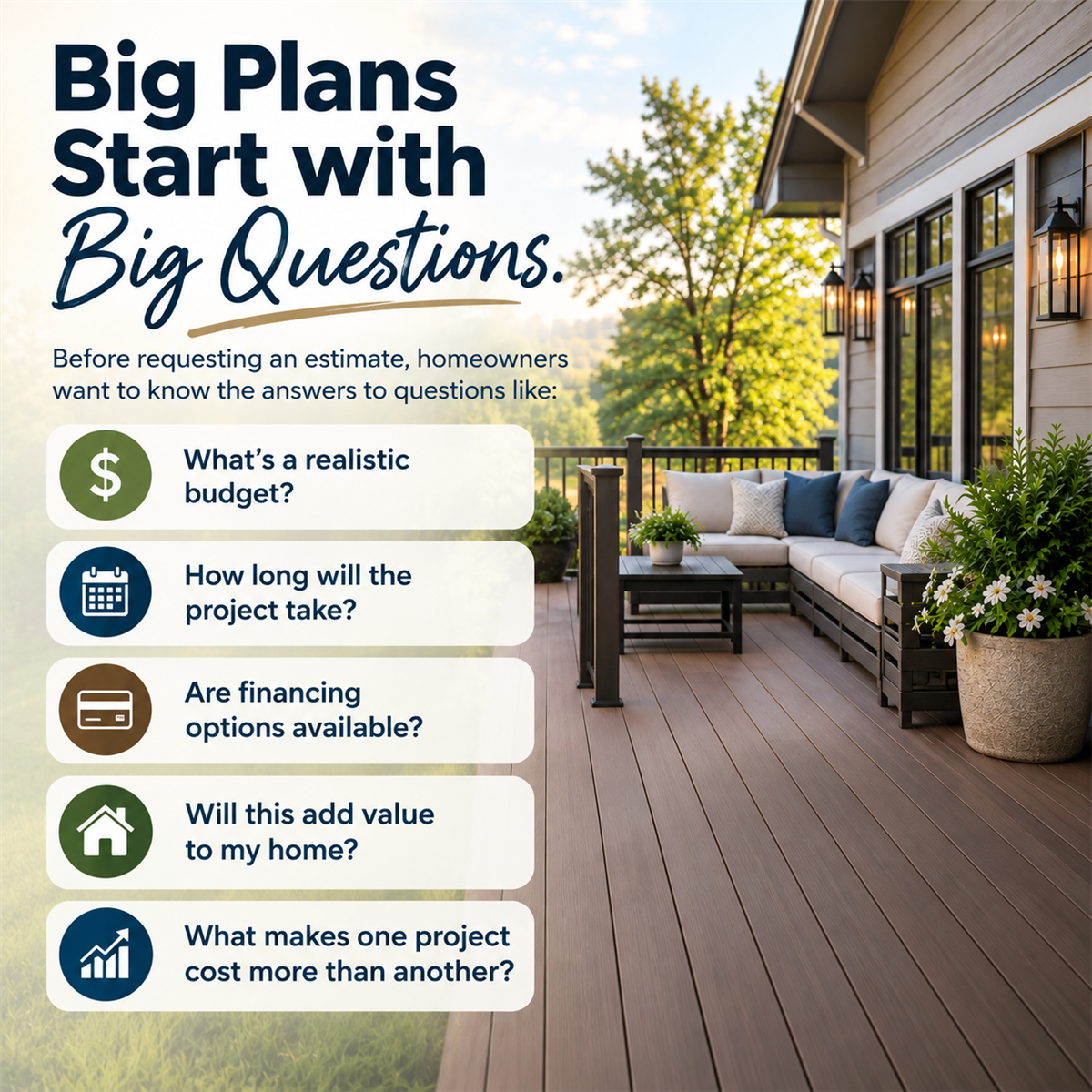
That's one reason financing has become increasingly common in the home improvement industry. Instead of putting off an important project while saving for the entire cost, homeowners may be able to spread that investment over time.
But financing isn't one-size-fits-all. Before signing anything, it's important to understand how contractor financing works, what you're actually paying, and which questions you should ask.
Why Has Home Improvement Financing Become So Popular?
The cost of materials, labor, and home improvement projects has increased over the years. At the same time, homeowners aren't necessarily sitting on enough cash to comfortably pay for a major exterior renovation all at once.
Financing can bridge that gap.
Rather than asking, "Can I afford to spend $30,000 today?" homeowners can evaluate whether a project and its payment fit within their monthly budget.
Financing can also allow homeowners to address projects sooner—especially when they're dealing with deteriorating siding, failing windows, unsafe decking, or other issues that could become more expensive if ignored.
Contractor Financing vs. Going to a Bank
One of the biggest questions homeowners have is: Why finance through a contractor instead of my bank or credit union?
Traditional banks and credit unions may offer home equity loans, HELOCs, personal loans, or other borrowing options. Depending on your situation, those may be worth considering.
Contractor financing is different because the financing process is typically integrated into the home improvement experience.
Instead of finding a contractor, getting an estimate, contacting a separate lender, waiting for approval, and then returning to the contractor, financing options may be discussed during the project-planning process.
The important thing isn't necessarily where you finance. It's understanding the complete terms and comparing your options before making a decision.
The Psychology of $30,000 vs. $300 a Month
There's a reason financing advertisements often focus on monthly payments.
A $30,000 project sounds like a major financial decision.
A monthly payment can feel much more manageable.
But homeowners need to consider both numbers.
A comfortable monthly payment doesn't automatically mean you're getting the best financing option. A lower payment could simply mean you're paying the loan over a longer period, potentially increasing the total amount you pay.
When evaluating financing, look beyond:
"What's my monthly payment?"
Also ask:
- What is the interest rate?
- What is the APR?
- How long is the loan term?
- What is the total amount financed?
- What will I pay over the entire life of the loan?
- Are there financing or origination fees?
- Is there a penalty for paying the loan off early?
- Does the interest rate change?
- Are there promotional terms that eventually expire?
The monthly payment matters—but it shouldn't be the only number guiding your decision.
Where Home Improvement Financing Is Heading
Financing is becoming faster and more convenient.
Homeowners increasingly expect the same experience they've become accustomed to in other industries: simple applications, quick decisions, digital paperwork, and clear payment options.
That could mean more:
Instant or Faster Approvals
Digital lending technology can make it possible for homeowners to apply and receive a decision much faster than traditional lending processes.
Buy Now, Pay Later Concepts
Consumers have become familiar with installment payments when purchasing everything from furniture to electronics. Similar concepts are influencing larger purchases, including home improvement.
More Flexible Payment Options
The industry will likely continue experimenting with different loan structures and payment plans designed around homeowners' budgets and project sizes.
Convenience, however, should never replace careful decision-making.
Fast approval doesn't mean you need to make a fast decision.
Watch Out for the Fine Print
Financing can be a valuable tool when it makes sense for your financial situation. Problems arise when homeowners don't fully understand the agreement they're signing.
Before accepting any financing offer, look carefully for:
Deferred interest: Some promotional programs may charge interest retroactively if the balance isn't paid within the promotional period.
Variable rates: Determine whether your interest rate can change during the life of the loan.
Long repayment periods: A small monthly payment can look attractive, but an extremely long loan term may substantially change the overall cost.
Fees: Ask about origination fees, closing costs, financing fees, and other charges.
Prepayment restrictions: Find out whether you can pay additional principal or pay off the loan early without penalties.
Never be afraid to ask questions.
If you don't understand part of the financing agreement, don't sign until you do.
How Hutcherson Construction Approaches Financing
At Hutcherson Construction, we believe homeowners should understand what they're agreeing to.
Whether you're investing in a new deck, siding, windows, doors, or another exterior improvement, financing shouldn't feel like a confusing sales tactic.
Our goal is to help homeowners understand the options available to them so they can determine what makes the most sense for their home, project, and budget.
That means discussing the project itself, available payment options, and the questions homeowners should consider before moving forward.
Because ultimately, financing isn't about making a project look affordable.
It's about helping homeowners determine whether an investment is actually affordable for them.
Should You Finance Your Home Improvement Project?
There's no universal answer.
For one homeowner, paying cash may make the most sense. Another might prefer financing to preserve savings. Someone else may decide to use a home equity product through their bank or credit union.
Before deciding, compare your options and consider:
Your monthly budget: Can you comfortably make the payment?
Your emergency savings: Would paying cash significantly reduce your financial cushion?
The urgency of the project: Could delaying repairs create additional damage or expense?
The total financing cost: How much will you ultimately pay?
Other borrowing options: Have you compared the contractor's financing option with your bank, credit union, or other available financing?
A good financing decision should still feel good when you look beyond the monthly payment.
Planning an Exterior Project in West Michigan?
If you've been considering a new deck, siding, windows, doors, or another exterior improvement, don't let the financing conversation intimidate you.
Ask questions. Compare your options. Read the fine print. And work with a contractor who is willing to have a transparent conversation about both the project and the investment.
Hutcherson Construction proudly helps homeowners throughout West Michigan improve and protect their homes.
Ready to start planning your project? Contact Hutcherson Construction today to schedule a free estimate and learn more about the options available for your home. 269-685-0900
Tags
Subscribe to Hutcherson Construction's Blog




Comments